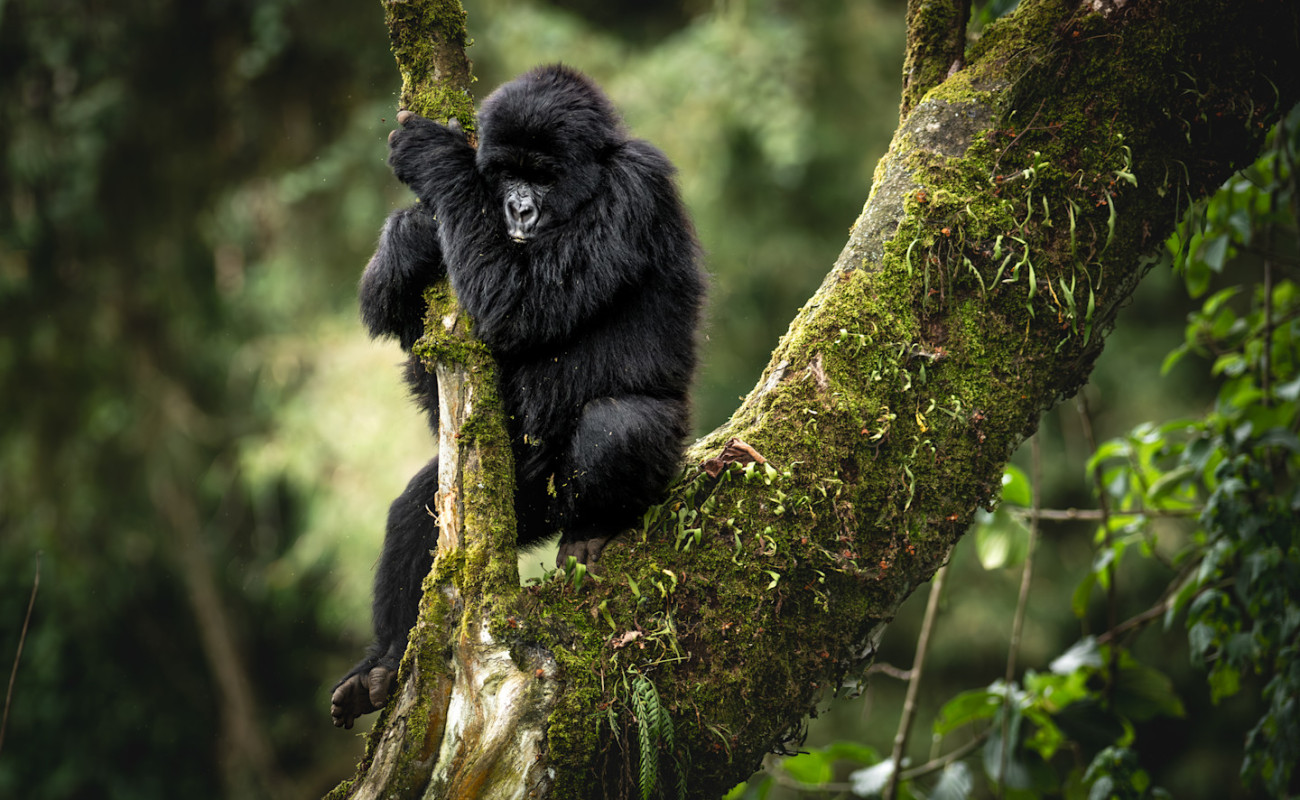

Photographing mountain gorillas in the wild forests of East Africa is one of the most powerful wildlife photography experiences on Earth. Deep within the ancient rainforests of Uganda and the volcanic slopes of Rwanda, these gentle giants live in close-knit family groups, surrounded by mist, bamboo groves, and towering trees.
Capturing them beautifully requires preparation, patience, and respect. Gorilla photography is not about speed it is about awareness, storytelling, and connection.
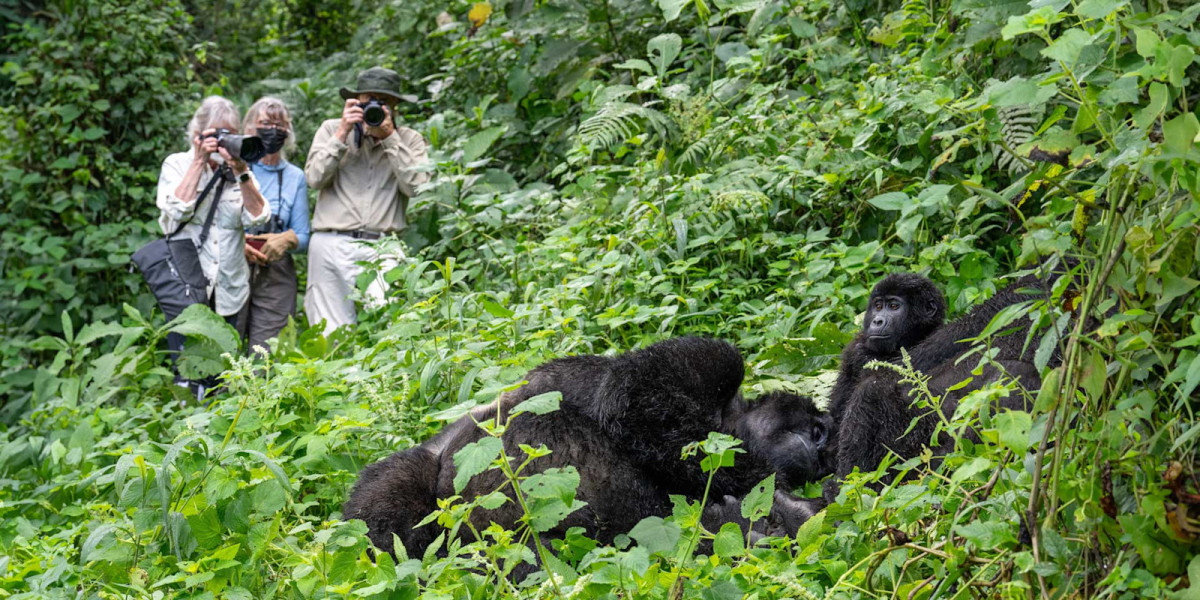
Gorillas live in dense, high-altitude rainforest. Light conditions change constantly. One moment you are in deep shade beneath thick canopy; the next, soft mist filters natural light through the trees.
Because of this:
Expect low-light conditions.
Be ready to adjust ISO quickly.
Watch how light falls on faces especially the silverback’s eyes.
The forest itself is part of the story. Do not isolate every image. Include the foliage, vines, and volcanic landscape to create atmosphere and depth.
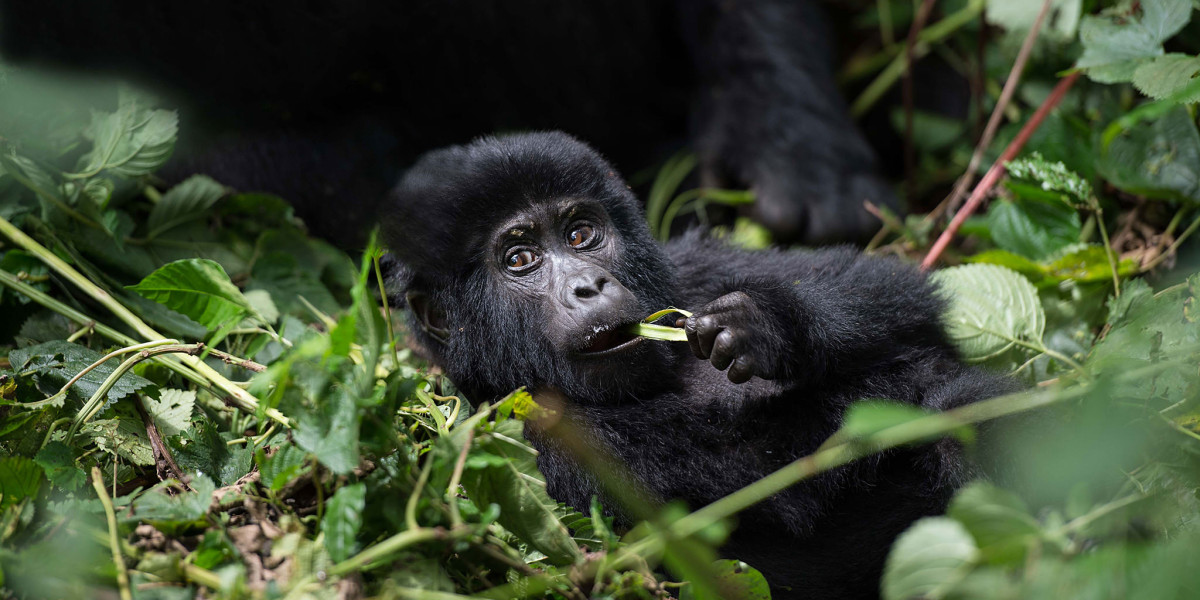
You do not need excessive gear, but the right tools make a difference.
A DSLR or mirrorless camera with strong low-light performance and fast autofocus is ideal. Gorilla encounters can involve subtle movements — a glance, a turn of the head, a playful leap from a juvenile.
A 70–200mm or 100–400mm lens is highly recommended. These ranges allow intimate close-ups while maintaining the mandatory 7-meter viewing distance.
A wider lens (24–70mm) is useful for environmental portraits showing gorillas within the rainforest setting.
Flash photography is strictly prohibited during gorilla trekking. It disturbs the animals and breaks the natural ambiance of the experience. Always rely on natural light.
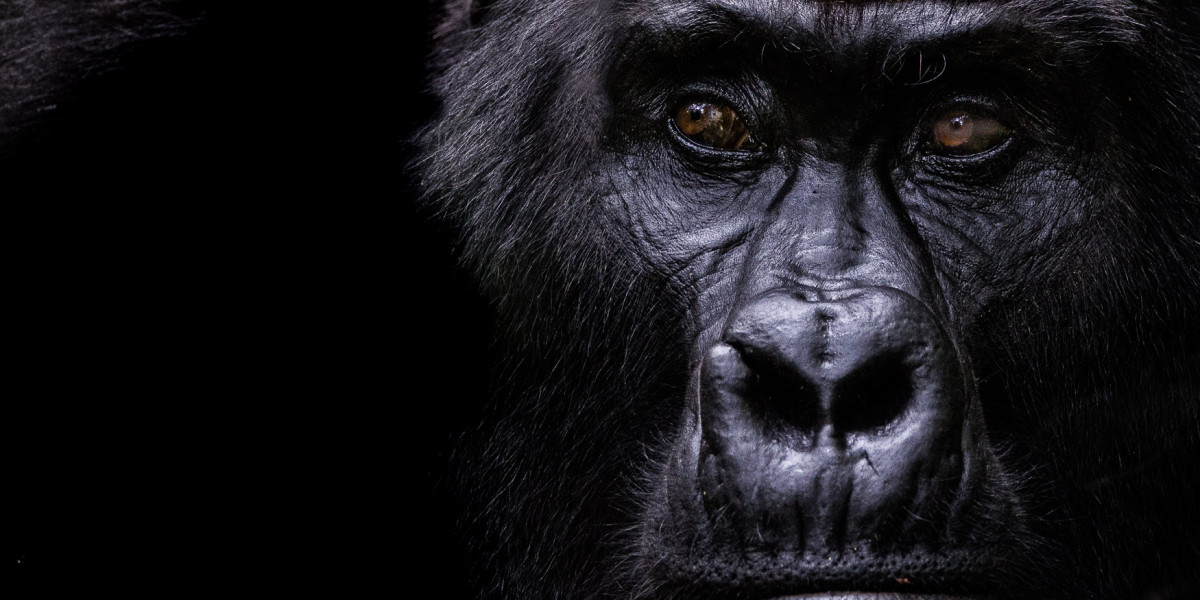
Because forests are dim and subjects move unexpectedly, technical settings matter:
Shutter Speed: 1/400–1/800 to freeze movement.
Aperture: f/2.8–f/5.6 to allow more light and create soft background blur.
ISO: Do not be afraid to raise it (800–3200) if needed. A sharp image with slight grain is better than a blurry one.
Shoot in RAW format for maximum flexibility in editing later.
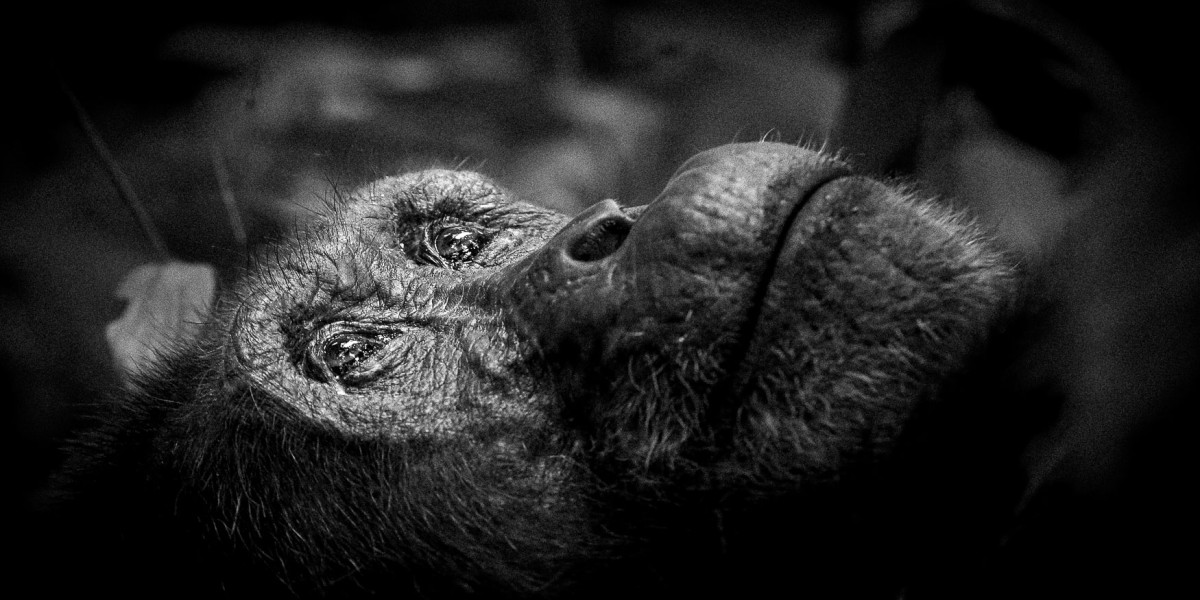
The most powerful gorilla images are not just portraits they are emotional moments.
Look for:
A silverback’s calm, watchful gaze.
A mother cradling her infant.
Juveniles tumbling and playing.
Gentle interactions within the group.
Eye contact, even brief, creates a profound connection in photographs. The eyes tell the story of intelligence and awareness.
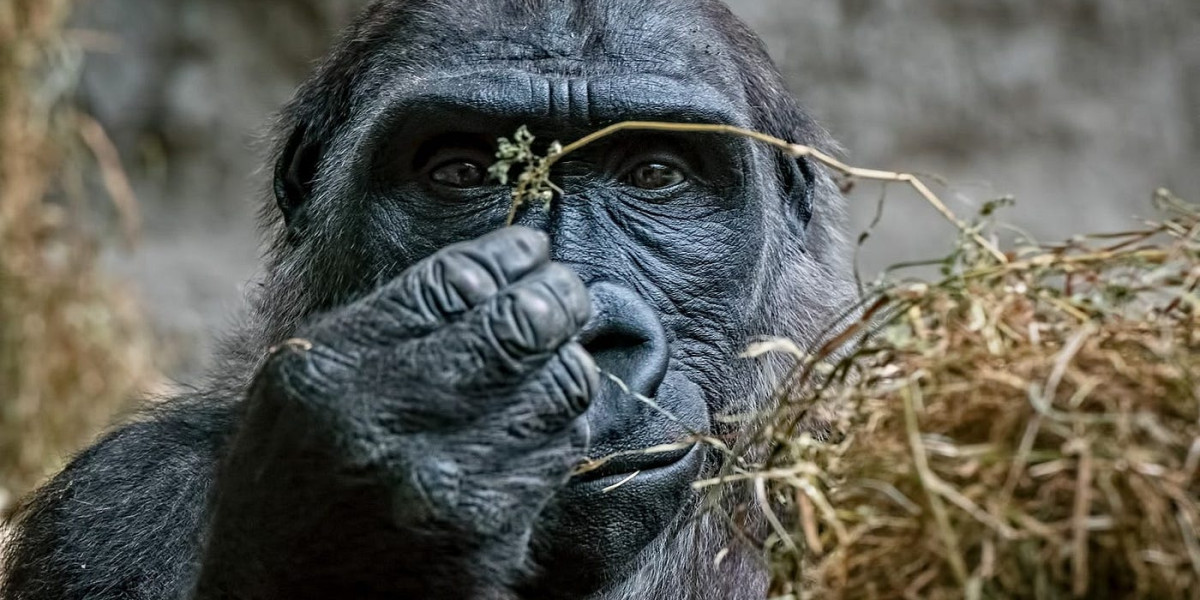
Gorilla photography is not rushed wildlife photography. You are given one hour with a habituated family. During that hour, slow down.
Instead of constantly shooting:
Observe behavior patterns.
Anticipate movements.
Wait for natural interaction.
Sometimes the most remarkable image comes after several quiet minutes of simply watching.
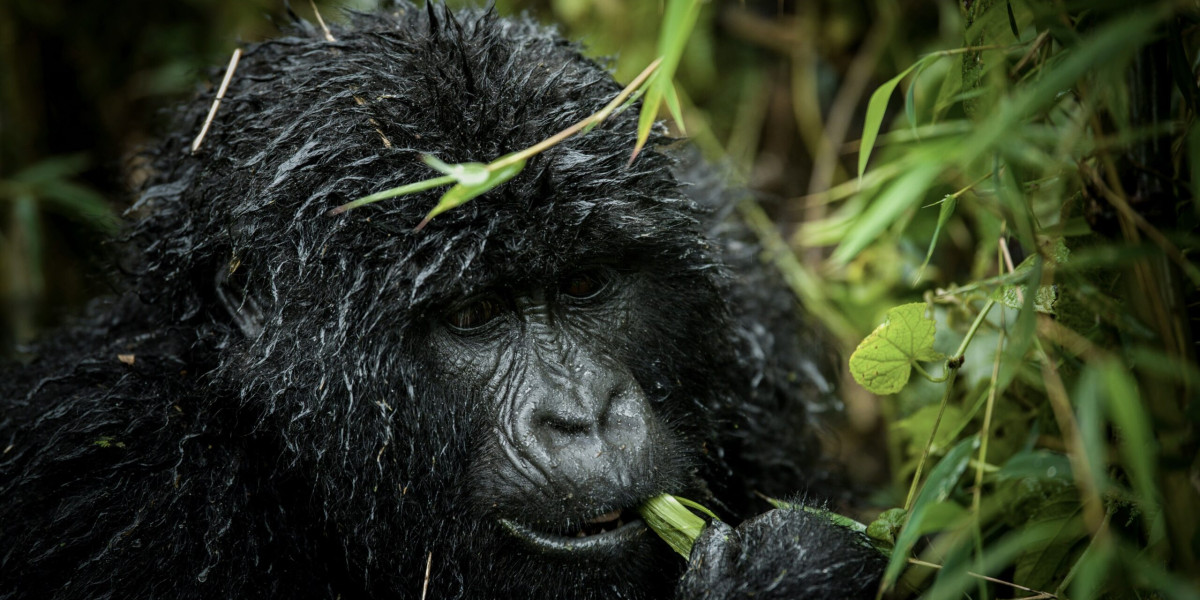
Photography must never compromise conservation.
Always:
Maintain the required 7-meter distance.
Follow your ranger’s instructions.
Move slowly and avoid sudden gestures.
Keep your voice low.
Remember, this is their home. You are a guest.
Ethical photography ensures that future generations will also have the opportunity to witness these extraordinary animals.
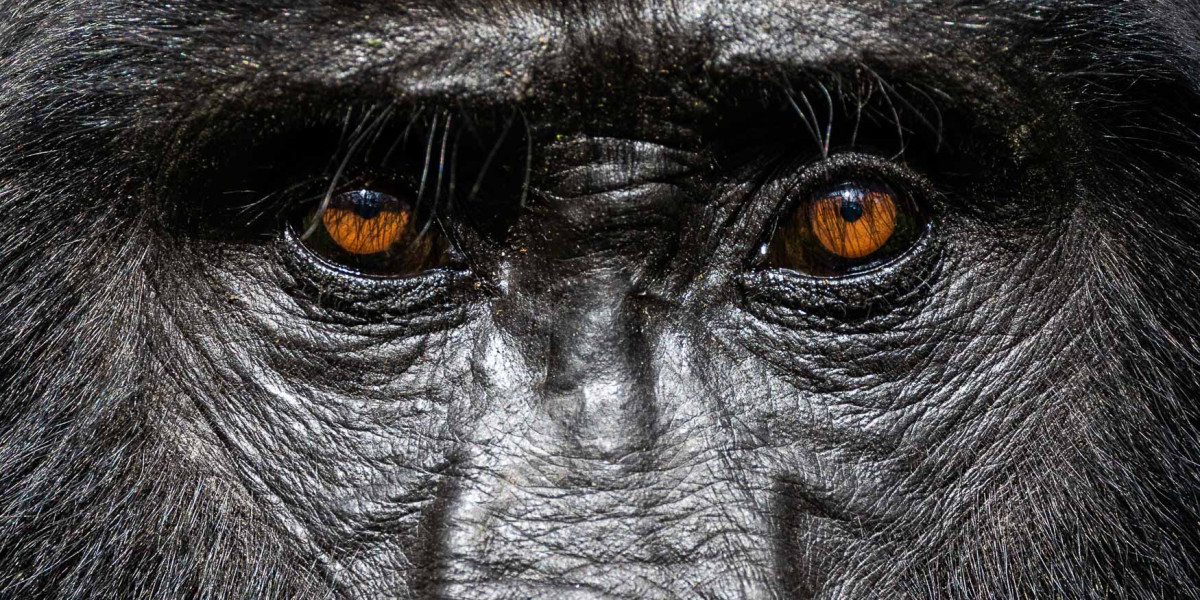
A complete gorilla photography collection includes:
Intimate close-up portraits.
Family group interactions.
Environmental wide shots.
Details like hands, expressions, or movement through foliage.
These images together tell a narrative not just a sighting.
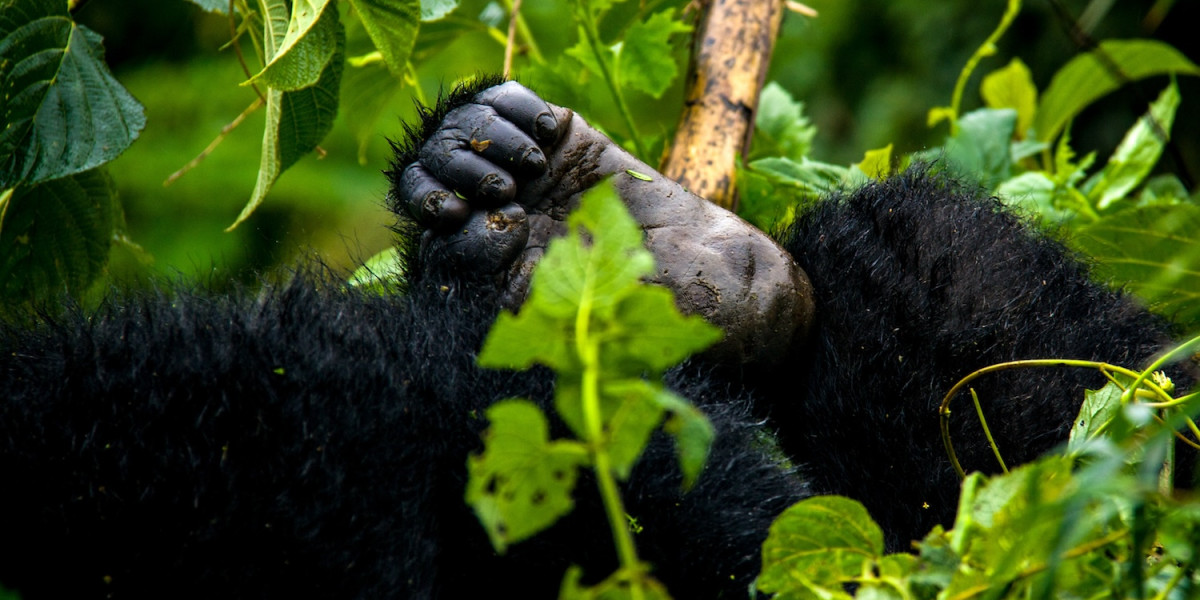
The journey to find gorillas may involve hiking through steep, muddy terrain. Protect your gear with waterproof covers and pack light. Use a comfortable camera strap or harness to keep equipment secure and accessible.
Comfort and preparation allow you to focus entirely on capturing the moment once you reach the gorillas
Photographing mountain gorillas is not simply about documenting wildlife. It is about preserving a rare encounter with one of humanity’s closest relatives in one of the last true wilderness strongholds on Earth.
The mist. The silence. The steady presence of a silverback just meters away. These are moments that transcend photography and when captured thoughtfully, they become timeless.
With Eagle Soul Adventure, your gorilla photography journey is expertly guided from start to finish. We arrange permits, select prime trekking sectors, secure luxury lodges near the forest, and position you for the most meaningful photographic opportunities all while respecting conservation standards at the highest level.
If you are ready to capture mountain gorillas in their natural habitat with purpose, patience, and professionalism, let Eagle Soul Adventure design your exclusive gorilla photography safari.
Because some images are not just taken they are earned.