
A Journey Into the Region’s Most Intelligent and Endangered Wildlife
When travelers think of East Africa, they often imagine golden plains stretching toward distant horizons, herds moving in rhythm with the seasons, and predators silhouetted against the setting sun. Yet beyond these open landscapes lies another Africa quieter, older, and infinitely more intimate. It is an Africa of towering rainforests, volcanic highlands, mist-laden valleys, and dense bamboo thickets. Here, among ancient trees and filtered light, lives one of the richest concentrations of primates on the continent.
A primate safari in East Africa is not merely an excursion; it is a deliberate journey into ecosystems shaped by intelligence, social complexity, and evolutionary proximity to humankind. Unlike traditional wildlife viewing conducted from a vehicle, primate tracking unfolds on foot. It requires patience, listening, and an understanding that the forest reveals its secrets gradually.
Within this forest kingdom, several remarkable species define the experience.
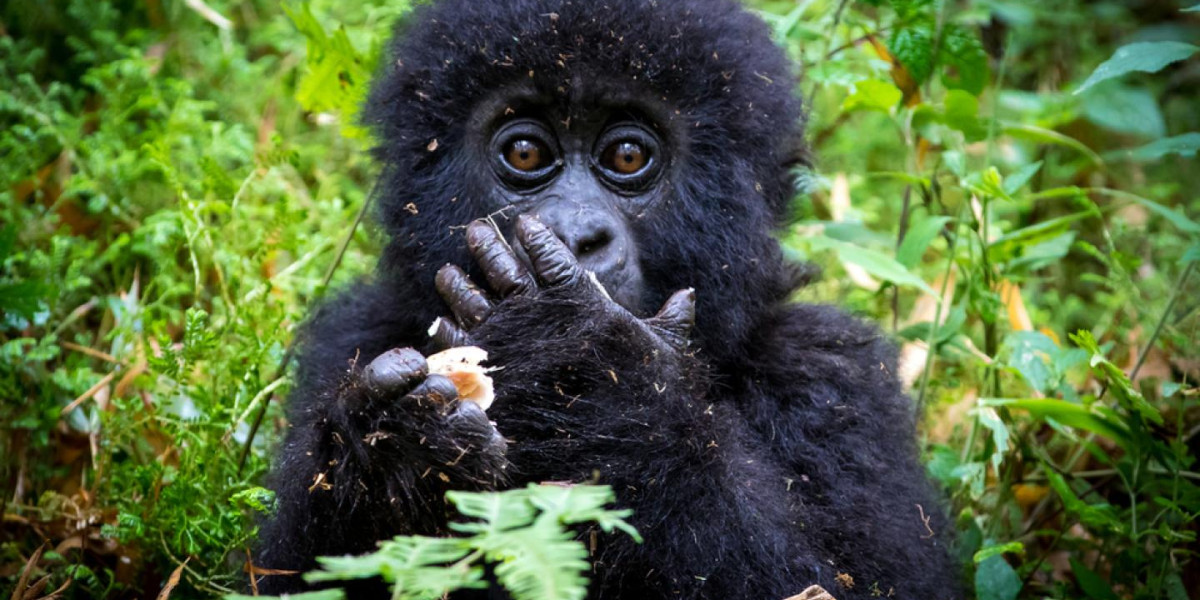
The mountain gorilla remains one of the rarest great apes on Earth, with a global population of just over 1,000 individuals. Their habitat is limited to high-altitude forests within the Albertine Rift, specifically in:
Bwindi Impenetrable National Park
Mgahinga Gorilla National Park
Volcanoes National Park
These gorillas live in stable family groups led by a dominant silverback whose responsibilities include protection, leadership, and maintaining group cohesion. The structure of gorilla society reflects remarkable organization:
Strong maternal care and long juvenile dependency periods.
Clear communication through vocalizations, posture, and subtle gestures.
Cooperative social grooming that reinforces bonds within the group.
Trekking to locate a habituated family can take several hours, depending on terrain and movement patterns. Once located, visitors are granted a strictly regulated hour in their presence. This policy protects the gorillas while allowing for meaningful observation.
What defines the encounter is not spectacle but stillness a silverback calmly shifting his weight, a mother adjusting her infant, or juveniles engaged in playful wrestling. The experience carries a profound emotional gravity rarely matched in wildlife tourism.
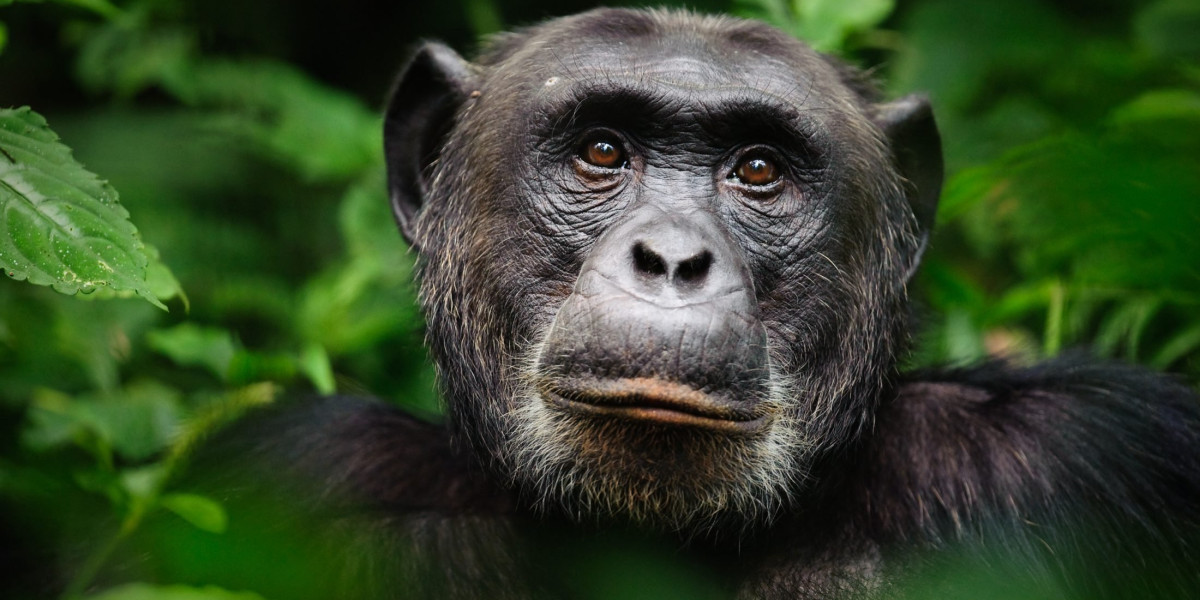
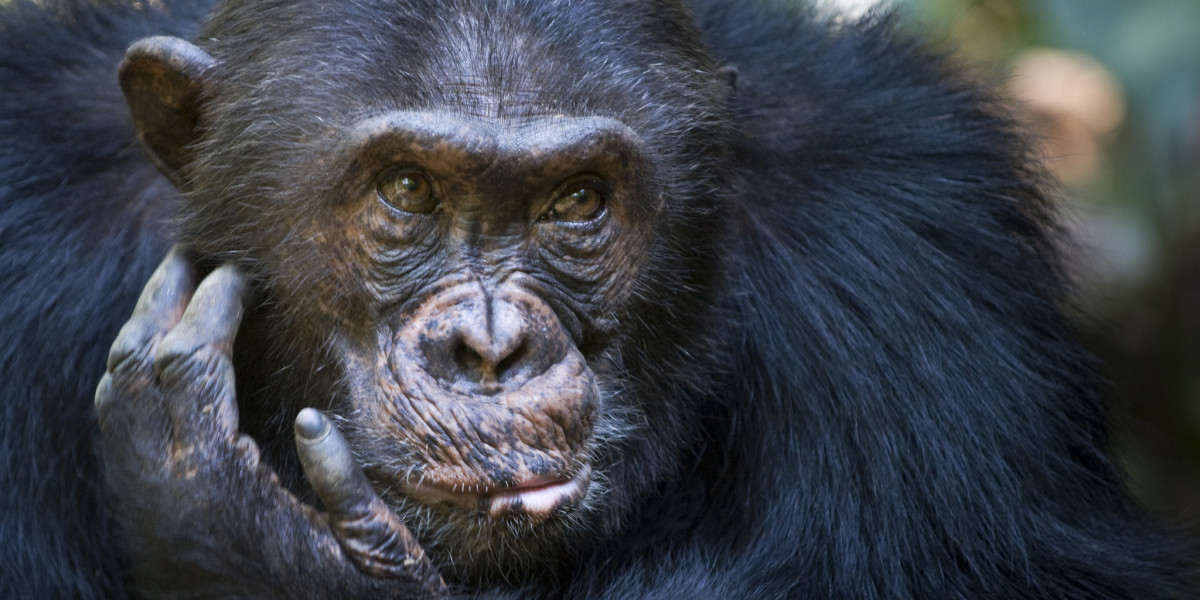
Chimpanzees share approximately 98 percent of their DNA with humans, making them our closest living relatives. Their behavior reflects high cognitive ability, emotional complexity, and strategic social structures.
Prime habitats in East Africa include:
Kibale National Park
Mahale Mountains National Park
Gombe Stream National Park
Nyungwe Forest National Park
Chimpanzee tracking differs from gorilla trekking in both pace and energy. While gorillas tend toward calm presence, chimpanzees are dynamic and vocal. They move rapidly through the canopy, communicate with loud pant-hoots, and display intricate social alliances.
Key behavioral characteristics include:
Tool use for foraging, such as termite extraction.
Coalition building and political hierarchy within groups.
Expressive emotional reactions, from reconciliation gestures to territorial defense.
In Mahale and Gombe, the dramatic setting of forested slopes descending into Lake Tanganyika adds extraordinary scenic depth to the encounter.
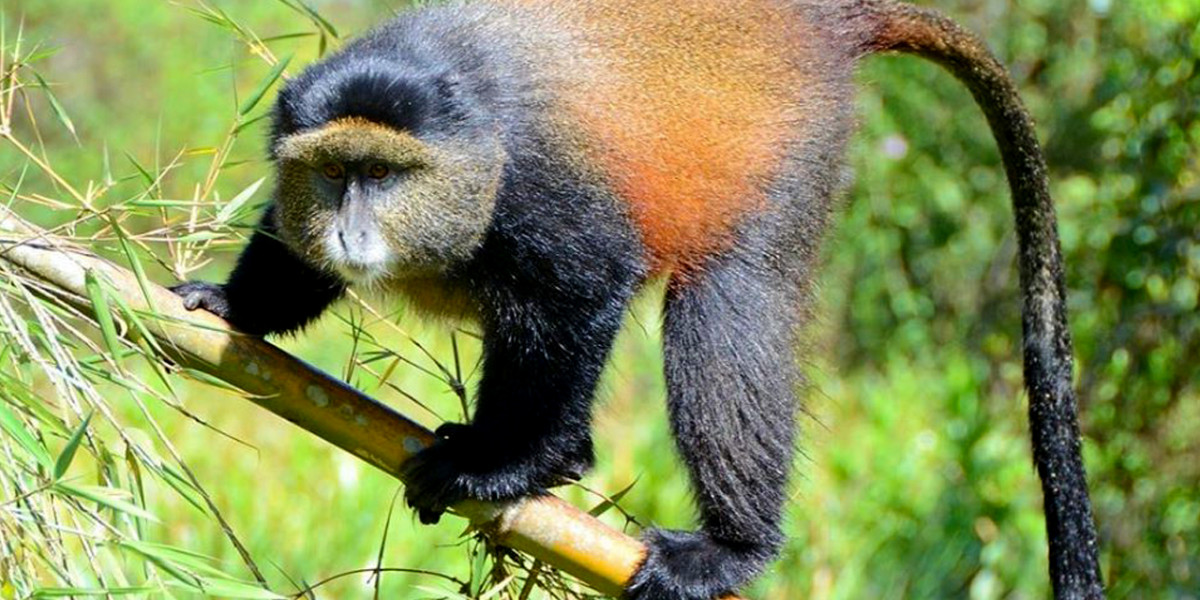
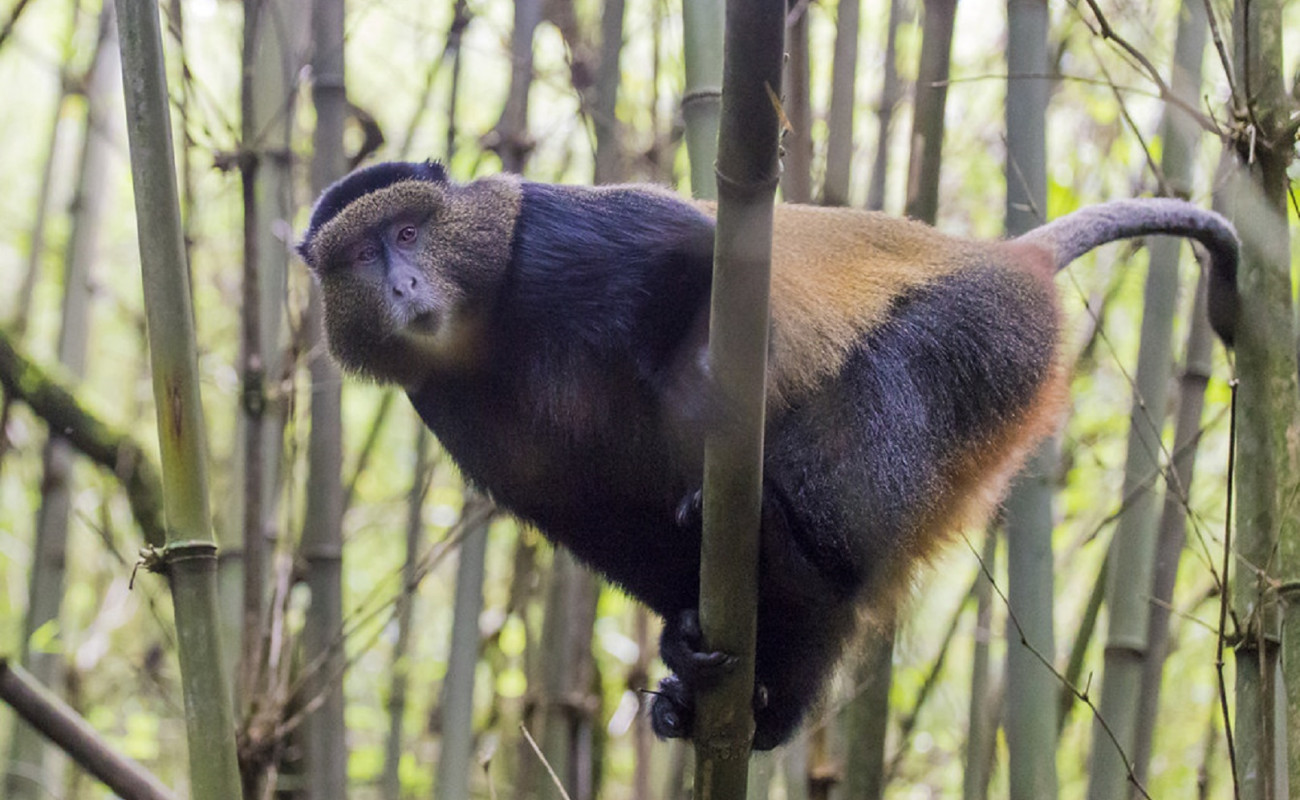
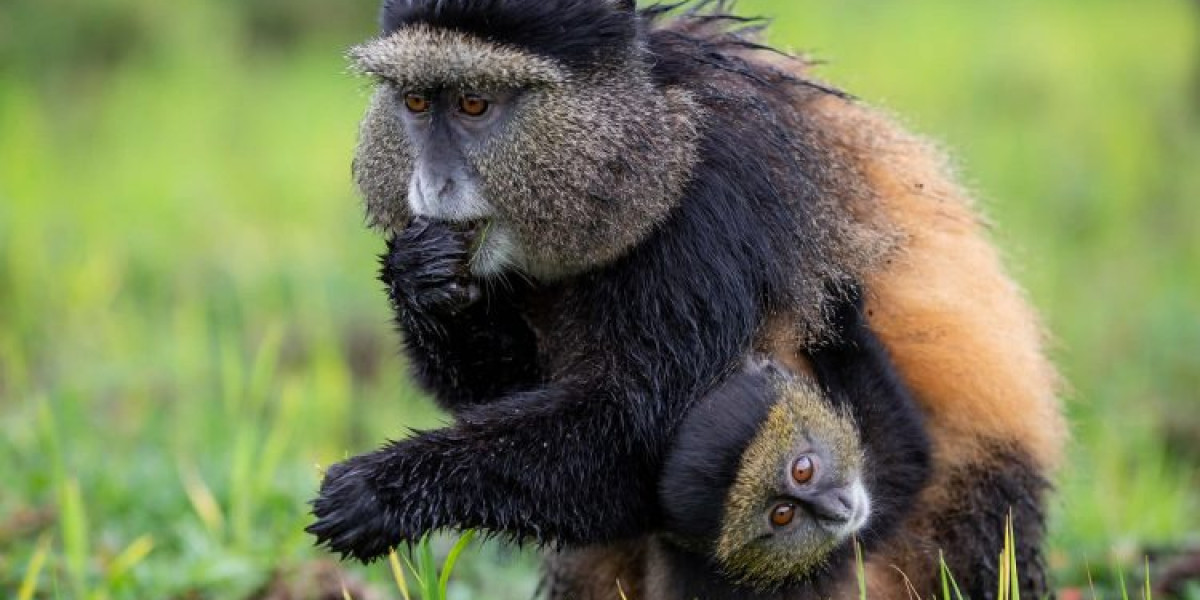
In the bamboo forests of the Virunga Mountains reside golden monkeys, smaller primates known for their vibrant orange-gold fur and agile movement. They inhabit:
Volcanoes National Park
Mgahinga Gorilla National Park
Golden monkeys are highly social and live in lively troops. Their habitat overlaps with mountain gorillas, allowing for combined trekking itineraries.
Distinctive traits include:
Specialized adaptation to bamboo forest ecosystems.
Fast-paced movement that challenges photography.
Strong group cohesion and visible curiosity toward observers.
Their presence adds vibrancy and contrast to the often mist-heavy forest environment.
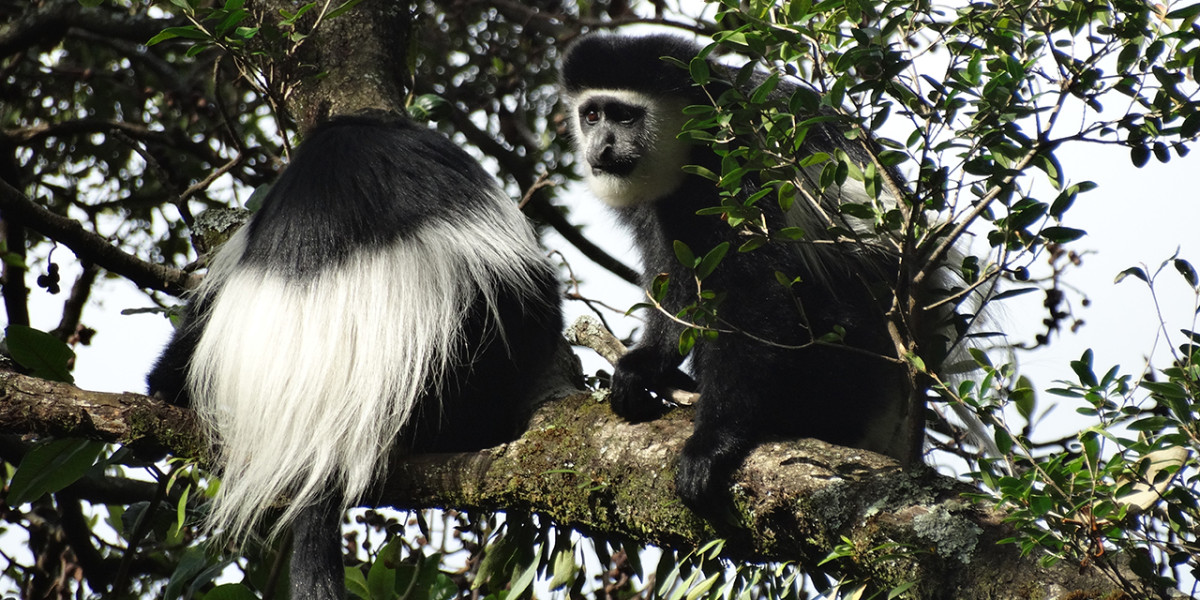
Colobus monkeys are among the most visually striking primates in East Africa. The black-and-white colobus species inhabit montane and riverine forests across the region, including:
Arusha National Park
Udzungwa Mountains National Park
Meanwhile, the endemic red colobus of Zanzibar survives uniquely within:
Jozani Forest National Park
Colobus monkeys differ anatomically from many other primates in that they lack fully developed thumbs, allowing greater agility in arboreal movement. They are folivores, possessing complex stomach systems capable of digesting fibrous leaves.
Their ecological role includes:
Seed dispersal within forest ecosystems.
Maintenance of vegetation balance through leaf consumption.
Serving as prey species within broader ecological networks.
Watching them glide between treetops highlights the vertical dimension of forest life often overlooked in traditional safari narratives.
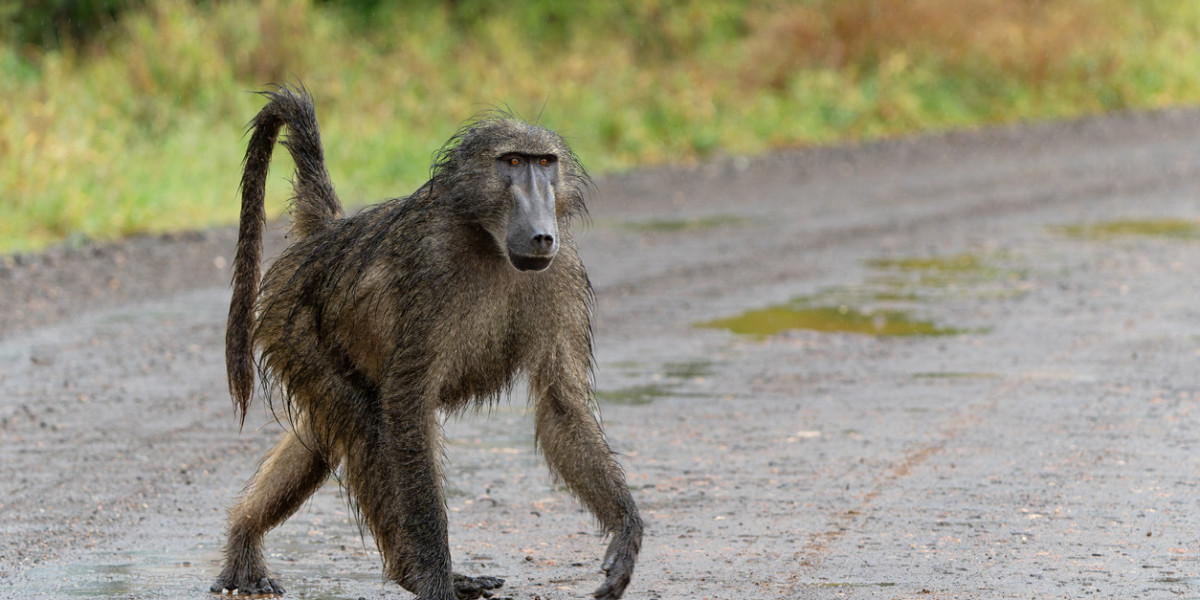
Olive baboons, blue monkeys, L’Hoest’s monkeys, and mangabeys contribute to the region’s incredible primate diversity. These species are commonly seen across national parks in Kenya, Tanzania, Uganda, and Rwanda.
Each species plays a vital ecological role, enriching the forests and savannah edges with complex social systems and fascinating behavior patterns.
Primate tourism has become a cornerstone of conservation funding in East Africa. Gorilla and chimpanzee permit systems generate direct revenue for:
Anti-poaching patrols.
Veterinary intervention programs.
Community education and healthcare initiatives.
Habitat protection and park management.
Strict regulations limit visitor numbers, enforce minimum viewing distances, and monitor human health protocols to prevent disease transmission.
This model demonstrates how carefully managed tourism can protect endangered species while supporting local livelihoods.
Primate trekking is available throughout the year, though optimal conditions occur during the dry seasons:
June to September.
December to February.
During these periods, forest trails are more navigable and visibility improves. However, the green seasons offer lush scenery, dramatic cloud cover, and fewer visitors, appealing to photographers and travelers seeking solitude.
A primate safari demands attentiveness. You move slowly. You listen for distant calls. You observe subtle shifts in foliage. Unlike the expansive drama of the savannah, forest encounters unfold in concentrated intimacy.
The experience reshapes perspective. It invites reflection on kinship, conservation, and coexistence. In the steady gaze of a gorilla or the strategic play of a chimpanzee, one recognizes intelligence that mirrors our own.
East Africa’s primates are not merely species to be cataloged; they are living testaments to evolutionary resilience and ecological interdependence.
To journey into their world is to step into a different dimension of safari one defined not by distance, but by proximity; not by spectacle, but by connection.
A primate safari is not an ordinary journey. It is an expedition into living forests where every step carries meaning, where conservation meets community, and where encounters are measured not in numbers, but in depth of experience.
At Eagle Soul Adventure, we believe that exploring the primates of East Africa should be transformative, seamless, and responsibly curated. Our team designs immersive journeys across Uganda, Rwanda, and Tanzania securing limited gorilla and chimpanzee permits, selecting exceptional forest lodges, and ensuring that every itinerary reflects both comfort and conservation integrity.
Whether you envision:
A dedicated mountain gorilla expedition in mist-covered highlands,
A combined chimpanzee and golden monkey trekking experience,
A forest-to-savannah safari blending primates with classic wildlife, or
A Zanzibar extension to witness the rare red colobus in Jozani Forest,
we craft each journey with precision, local expertise, and a deep respect for the ecosystems you will enter.
The forests of East Africa are ancient. The primates who inhabit them are extraordinary. The opportunity to witness them in the wild is rare and deeply personal.
Let Eagle Soul Adventure guide you beyond the ordinary safari into the heart of the forest, into meaningful encounters, and into a story you will carry for a lifetime.
Your primate safari begins the moment you decide to answer the call.